Identify the contents
Identify the actual item and any reliable maker reference. Keep small parts appropriately contained and away from children, and retain directions for the equipment they belong to.
Compare a suitable place
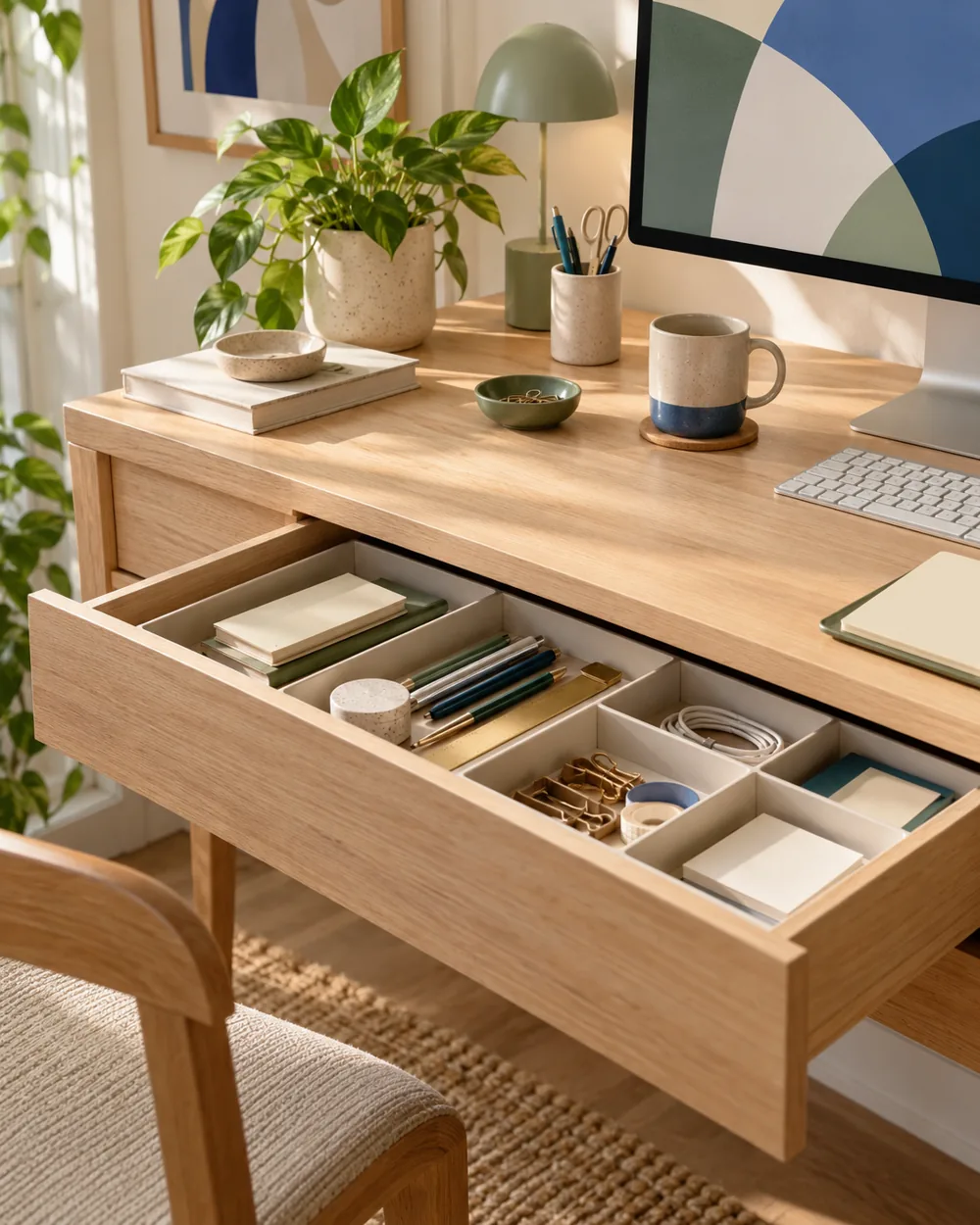
Choose a suitable container with usable compartments and a secure intended closure. Give each group a plain identifier rather than relying on a single photograph of similar-looking parts.
Check everyday access
Check that the lid closes without pressing on contents and that one group can be reached without mixing the rest. A smaller set is often easier to understand than a full box.
Keep the system understandable
Keep unresolved compatibility questions with the record. The container organizes known items; it does not establish that a spare part can be fitted to another device.
A couple of useful questions
Do I need to buy the objects in the picture?
No. The AI image is an editorial concept, not a product listing. Begin with your own suitable objects and actual dimensions.
Is this a tested equipment or health recommendation?
No. These are visual planning notes, not product tests or prescribed ergonomic settings. Use the actual maker instructions and your own requirements for equipment decisions.