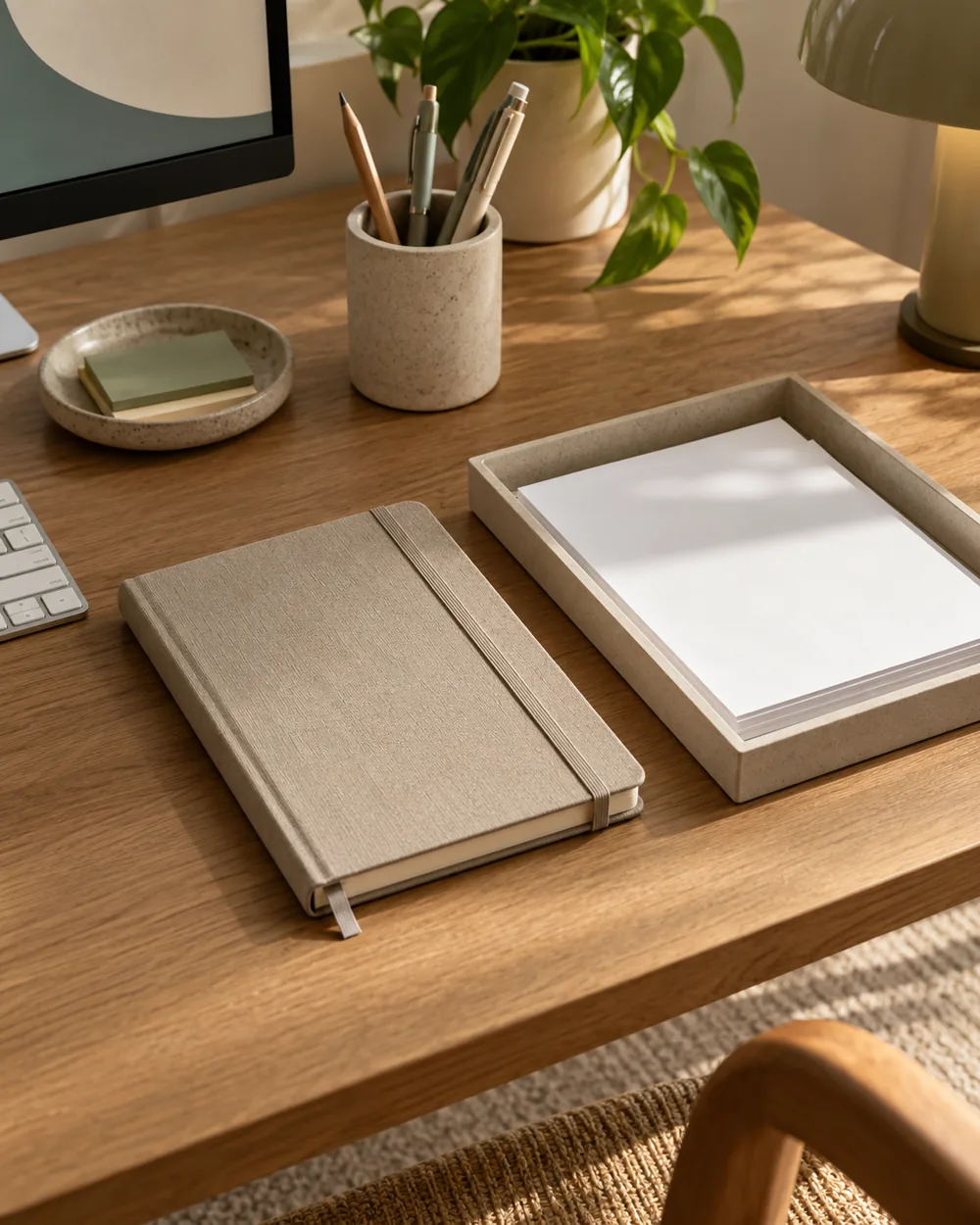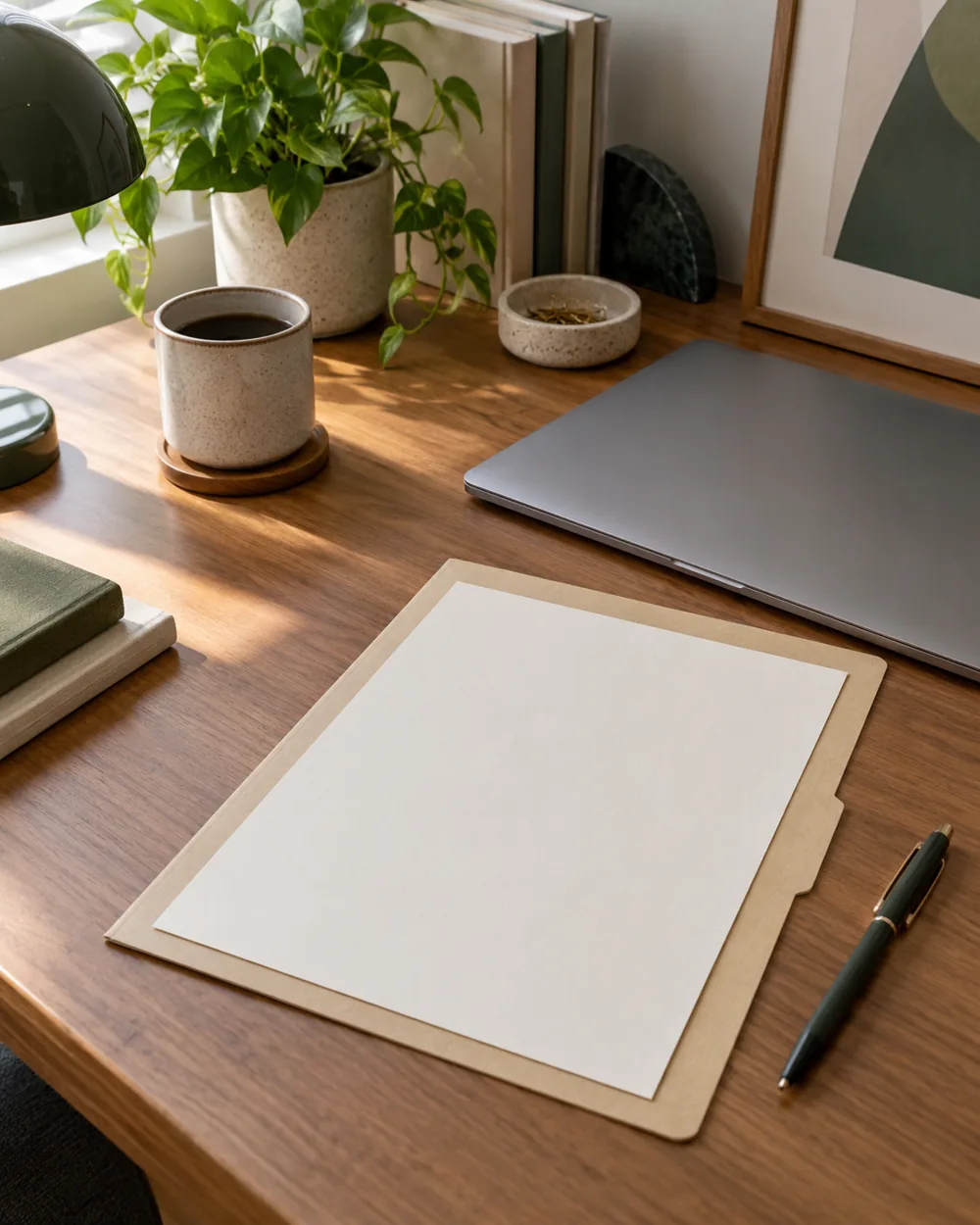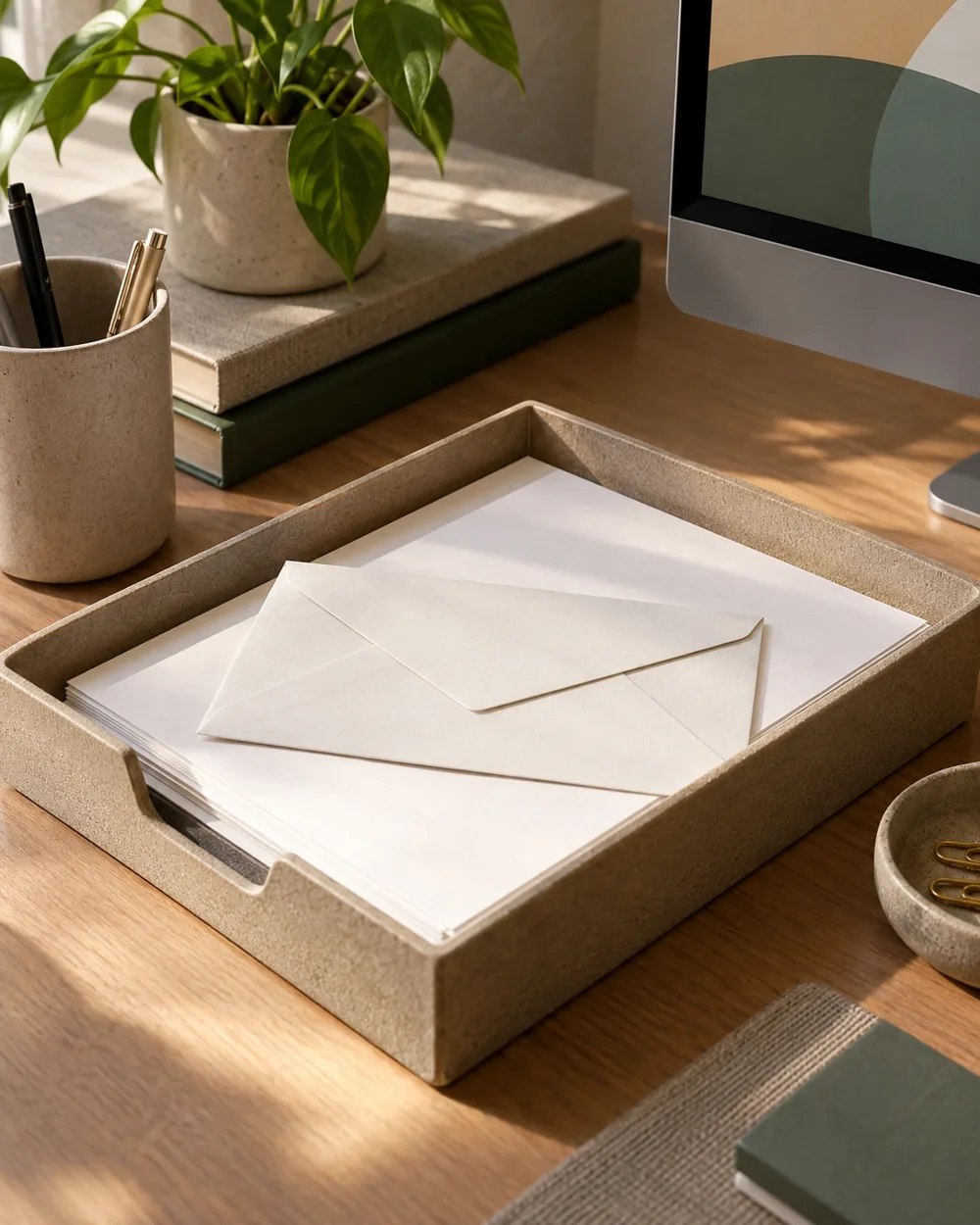
Define the paper’s purpose
Choose three stages appropriate to the task, such as incoming, action, and completed review. Write their meanings privately and keep sensitive titles out of public examples.
Make the current state clear
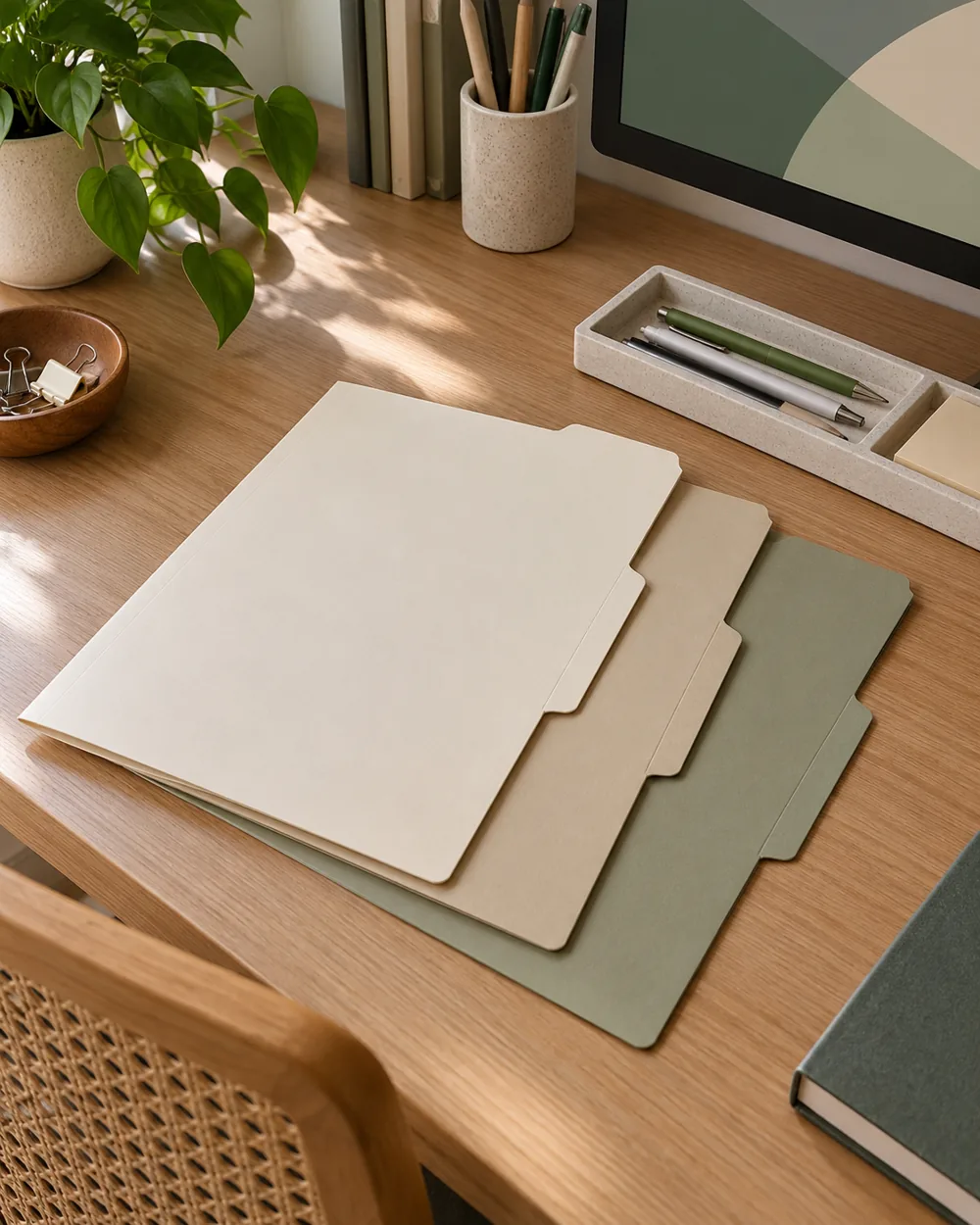
Use clearly distinguishable suitable folders or sections. Add a small current set and check that each paper has one understood next step.
Review the next action
Try moving a paper through the stages. If it can stay in every section indefinitely, revise the action description instead of creating more subdivisions.
Return it with context
Keep retention and disposal decisions aligned with your own document requirements. The folder is an organizational aid, not a substitute for deciding what a paper means or how long it must be kept.
A couple of useful questions
Do I need to buy the objects in the picture?
No. The AI image is an editorial concept, not a product listing. Begin with your own suitable objects and actual dimensions.
Is this a tested equipment or health recommendation?
No. These are visual planning notes, not product tests or prescribed ergonomic settings. Use the actual maker instructions and your own requirements for equipment decisions.