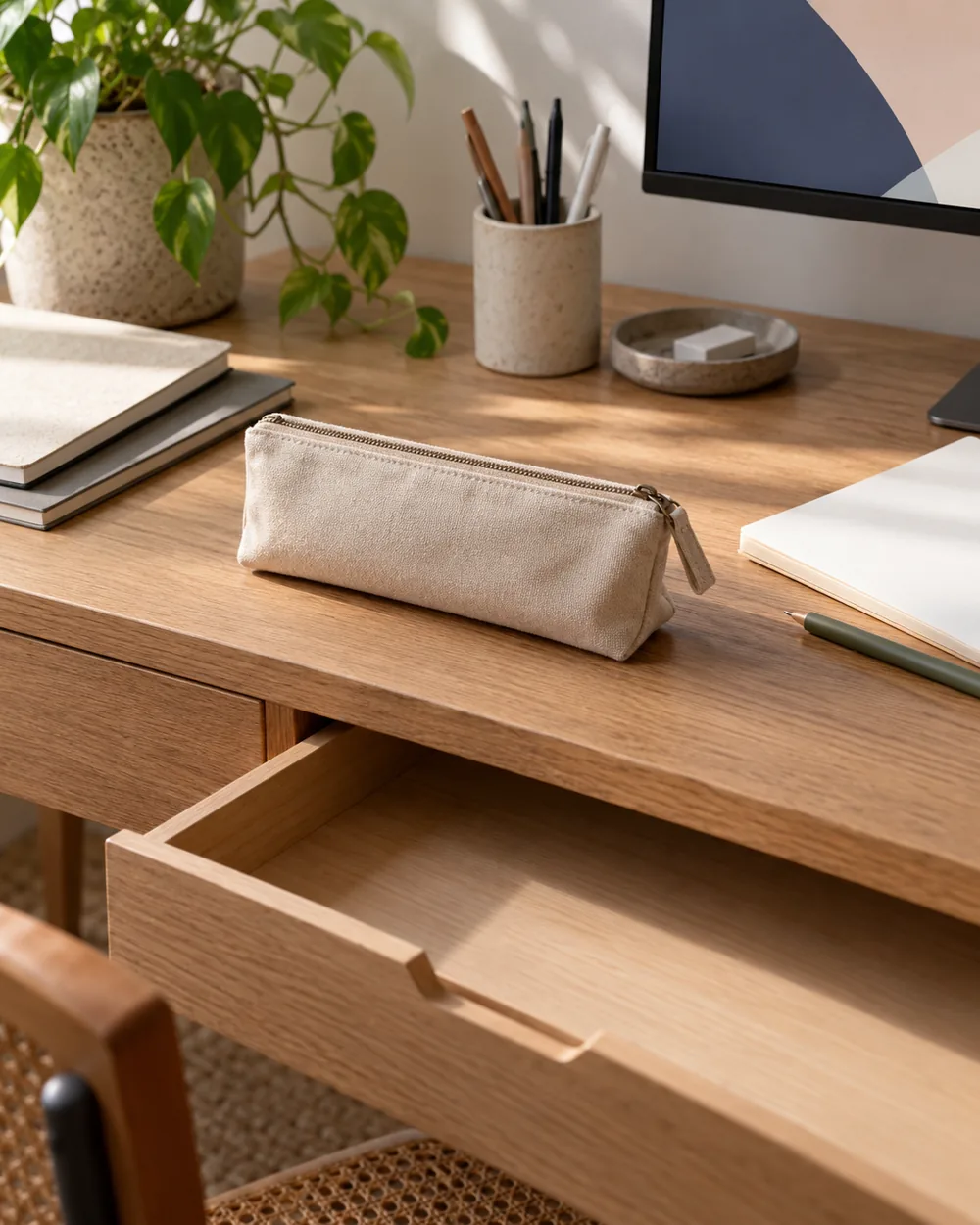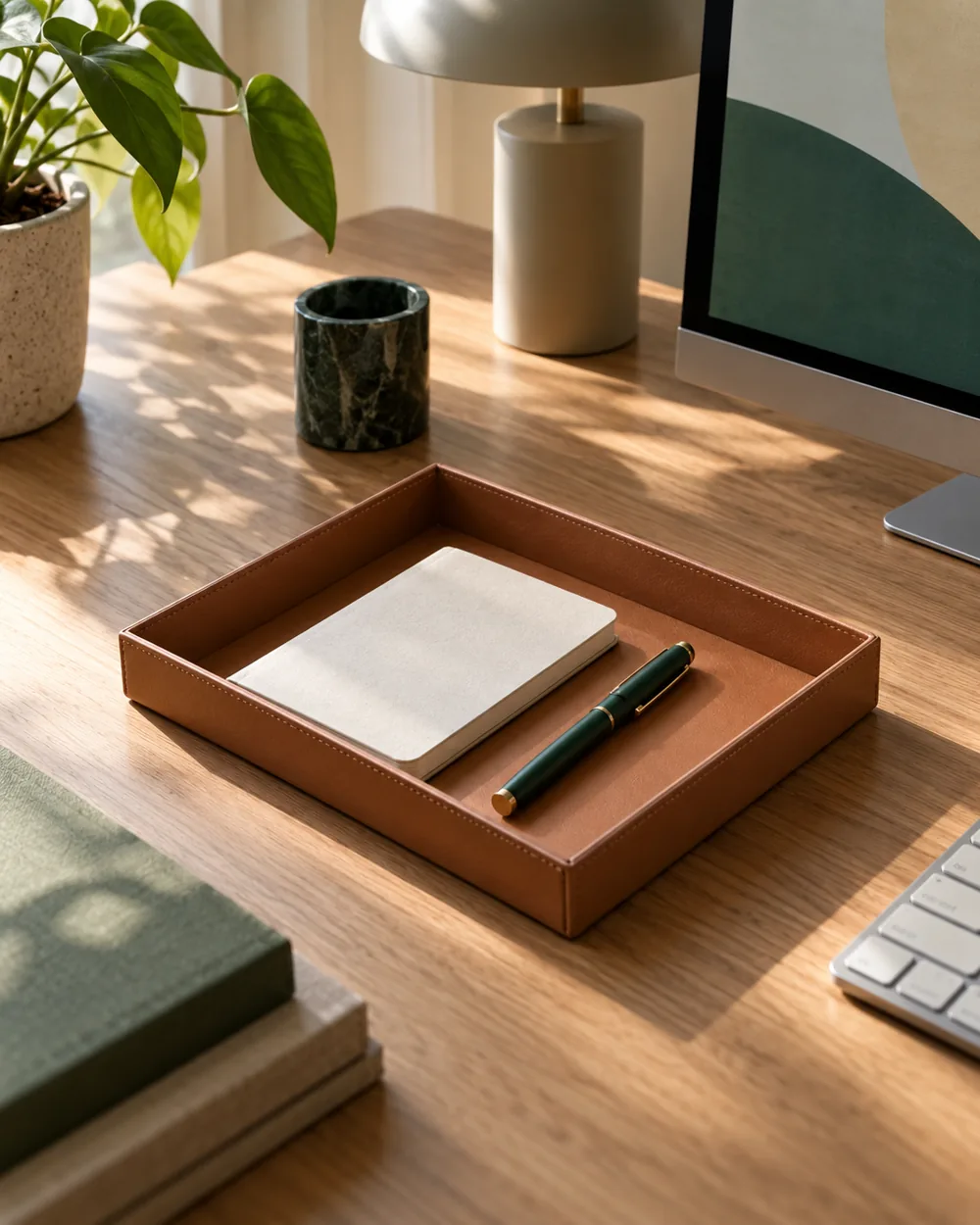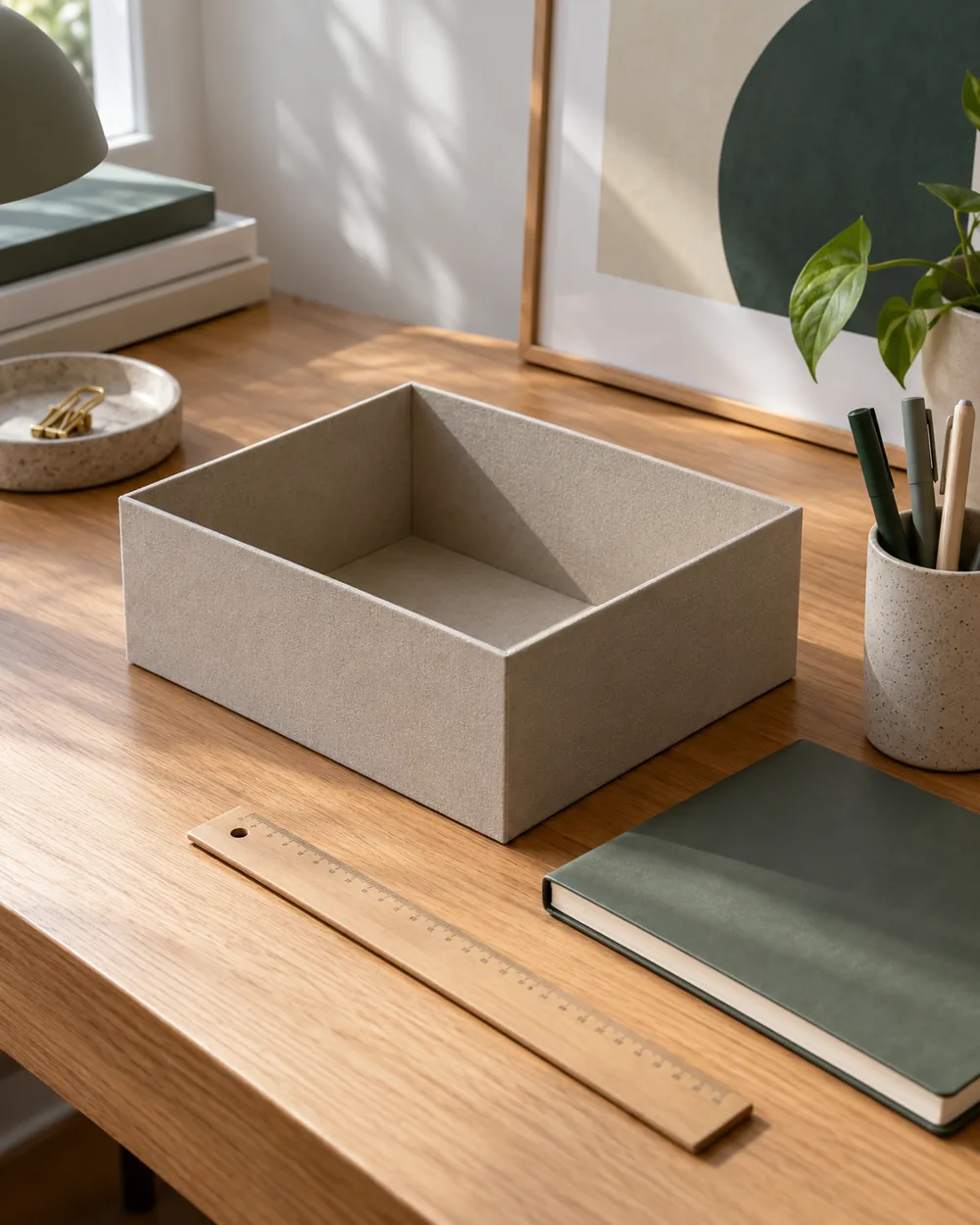
Measure the real opening
Identify the proposed contents and the actual shelf or desk location. Find the relevant maker information for the container and its supporting surface.
Plan the access route
Record verified limits and intended use privately. Leave an unknown requirement unresolved rather than estimating capacity from wall thickness or an AI image.
Compare a suitable fit
Use an empty suitable container only for a footprint comparison where appropriate. That visual trial does not verify a loaded arrangement or transport protection.
Record the requirements
Choose the actual storage plan after the requirements are checked. This guide organizes the decision and does not supply substitute load specifications or a lifting procedure.
A couple of useful questions
Do I need to buy the objects in the picture?
No. The AI image is an editorial concept, not a product listing. Begin with your own suitable objects and actual dimensions.
Is this a tested equipment or health recommendation?
No. These are visual planning notes, not product tests or prescribed ergonomic settings. Use the actual maker instructions and your own requirements for equipment decisions.