Identify what changes
Choose two real tasks and list their active objects separately. Include private context notes where needed rather than leaving sensitive papers visible between sessions.
Plan the inactive set
Identify an appropriate stopping state for the first task. Keep device operations and storage aligned with actual maker directions instead of using an arbitrary visual rule.
Try the transition
Set out the second task only after the inactive materials have a clear return place. Try the transition once and record the item that creates the most repeated movement.
Preserve the next step
Keep a short private handover list with the next action for each task. Timing is your own plan; this guide does not claim a particular schedule improves performance.
A couple of useful questions
Do I need to buy the objects in the picture?
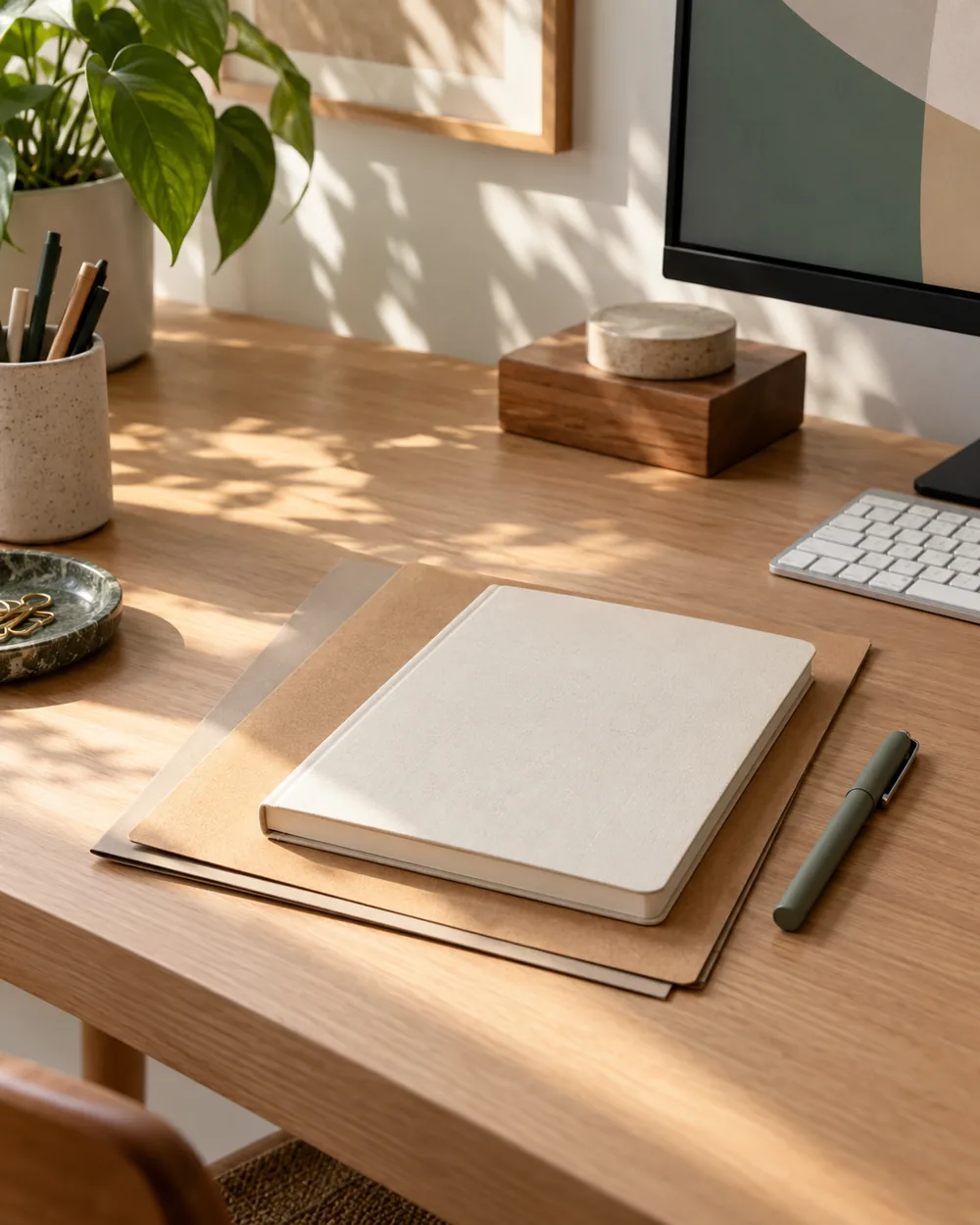
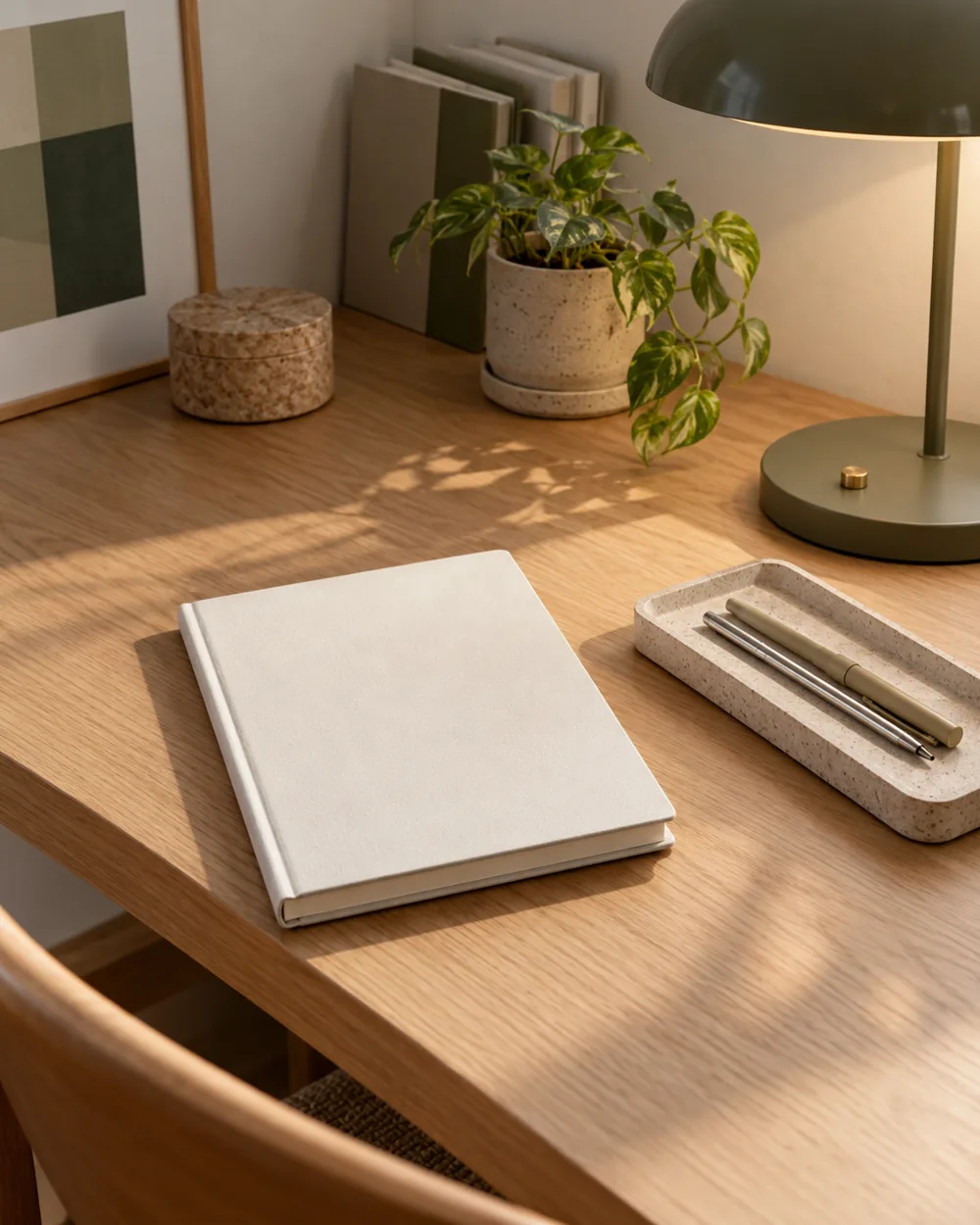
No. The AI image is an editorial concept, not a product listing. Begin with your own suitable objects and actual dimensions.
Is this a tested equipment or health recommendation?
No. These are visual planning notes, not product tests or prescribed ergonomic settings. Use the actual maker instructions and your own requirements for equipment decisions.