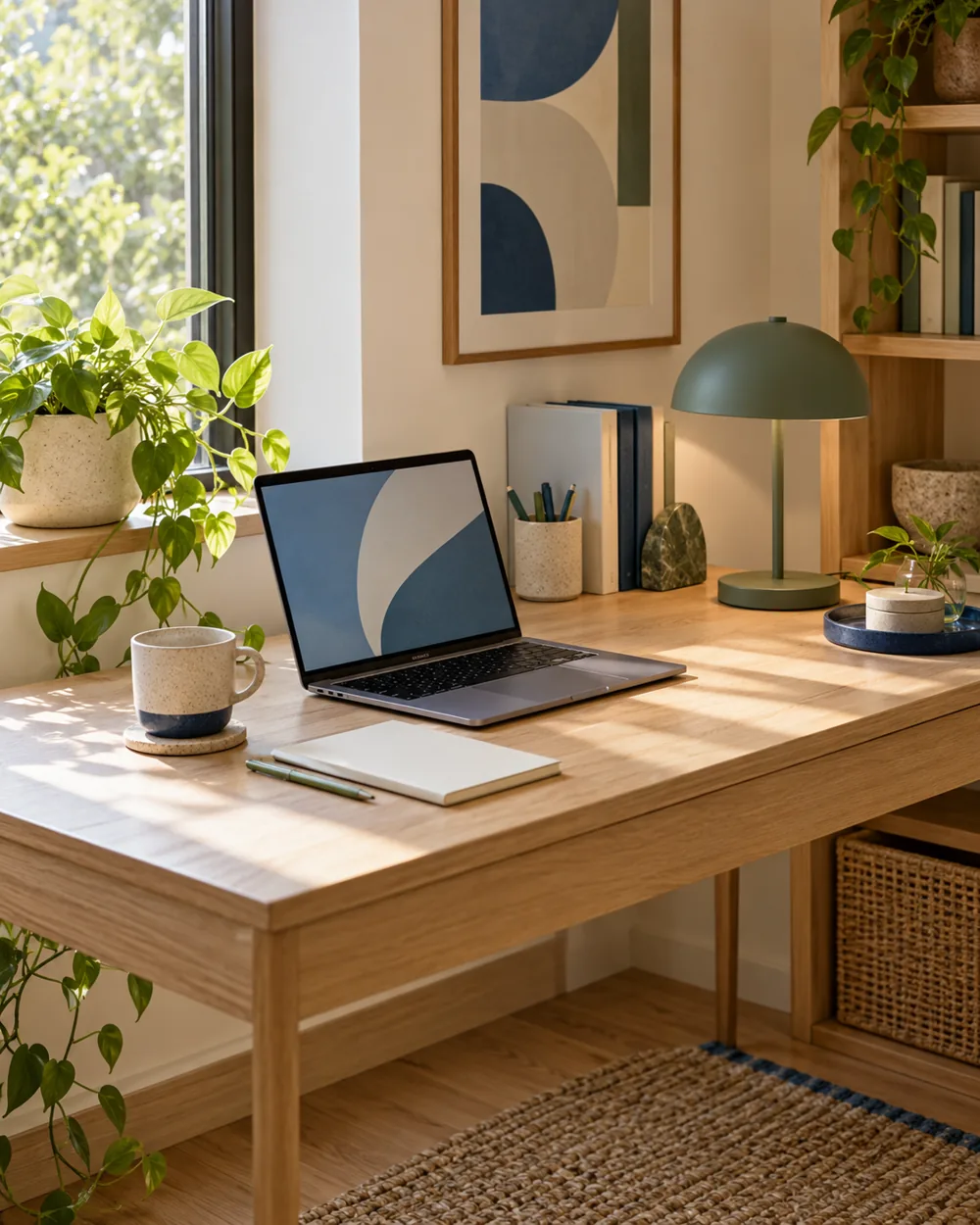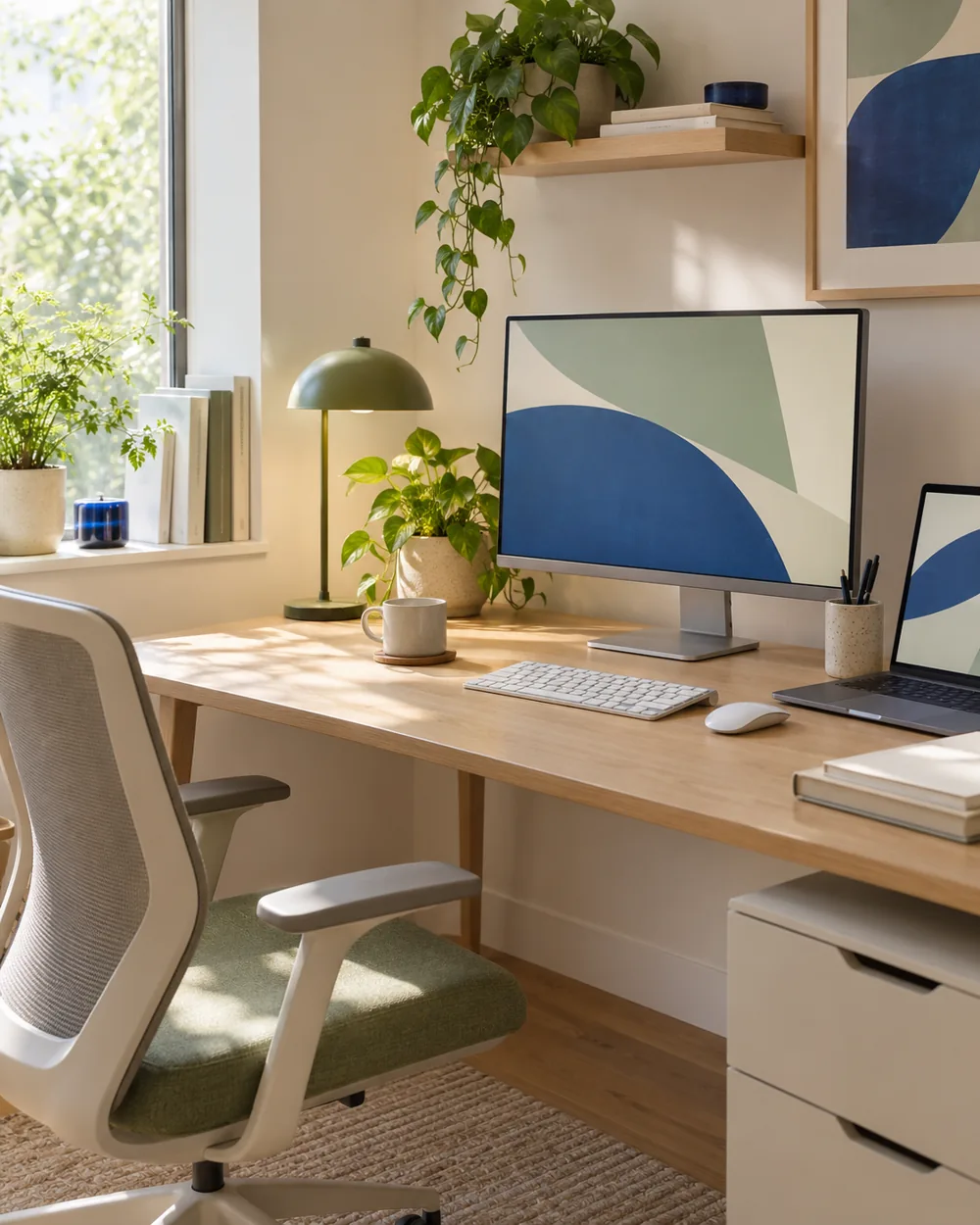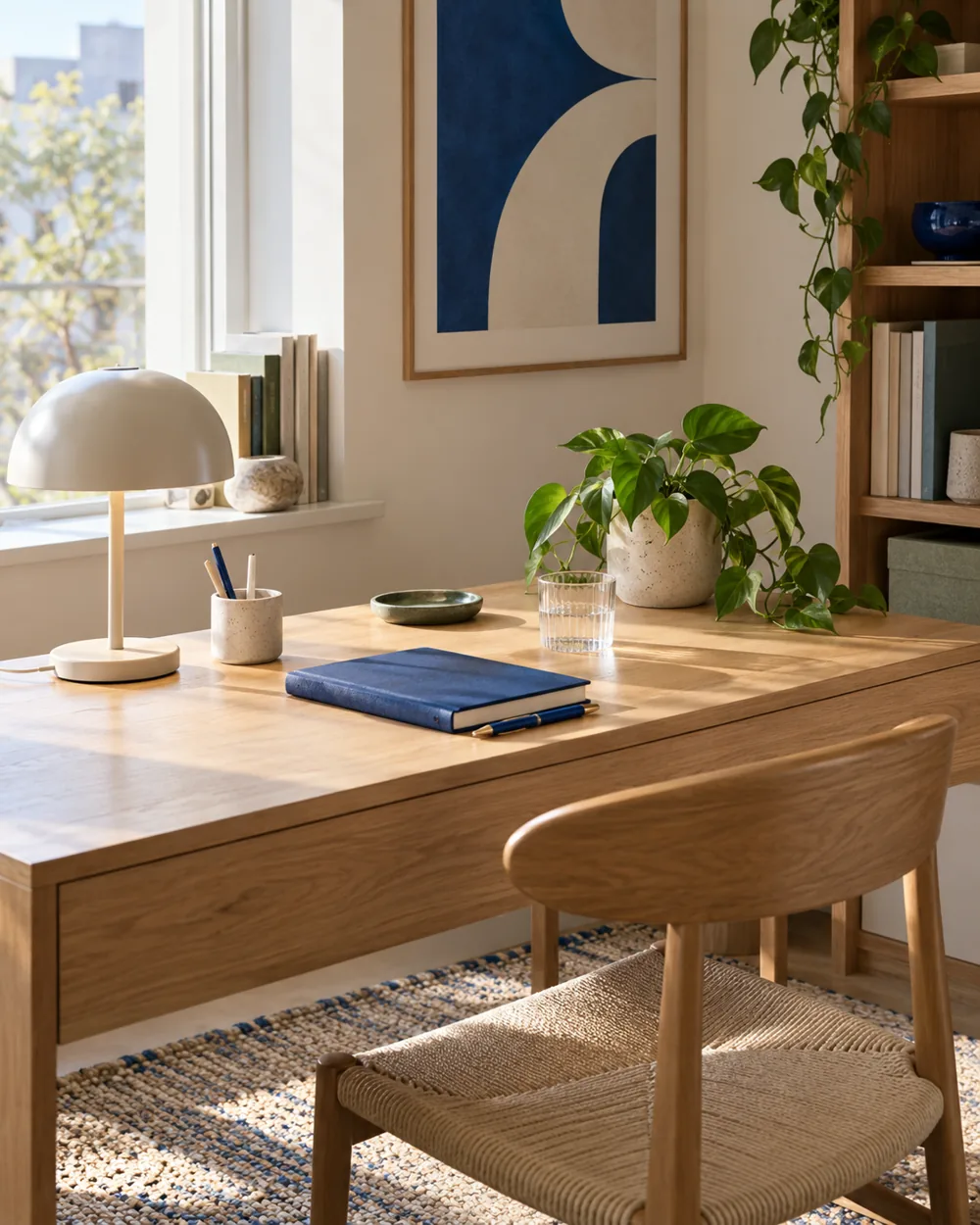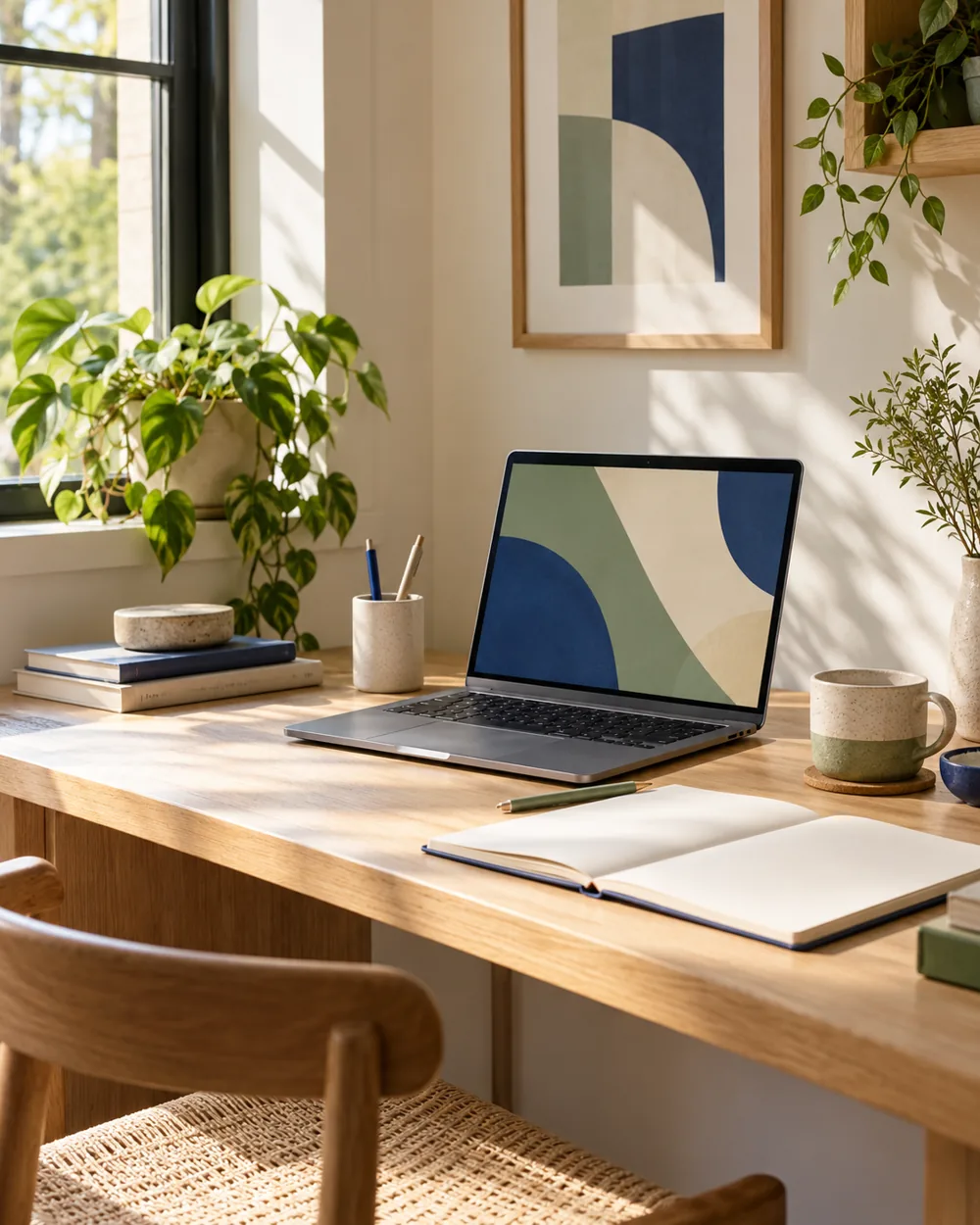
Record the available space
Write the actual difficulty in plain words, such as nowhere for the opened notebook or a container blocking a device. Measure the relevant area and keep equipment requirements visible.
Place the essentials
Remove an occasional or redundant item for a short trial. Try the ordinary task again before drawing a conclusion from an empty-desk photograph.
Try the ordinary task
If a gap remains, describe the required dimensions and access before looking at products. Ask for missing maker information rather than assuming a styled image demonstrates compatibility.
Keep the useful arrangement
Keep the review and any unresolved questions. A new piece should answer the defined task and fit the real room; no price, material, or performance claim is inferred from our generated image.
A couple of useful questions
Do I need to buy the objects in the picture?
No. The AI image is an editorial concept, not a product listing. Begin with your own suitable objects and actual dimensions.
Is this a tested equipment or health recommendation?
No. These are visual planning notes, not product tests or prescribed ergonomic settings. Use the actual maker instructions and your own requirements for equipment decisions.