Choose the real working set
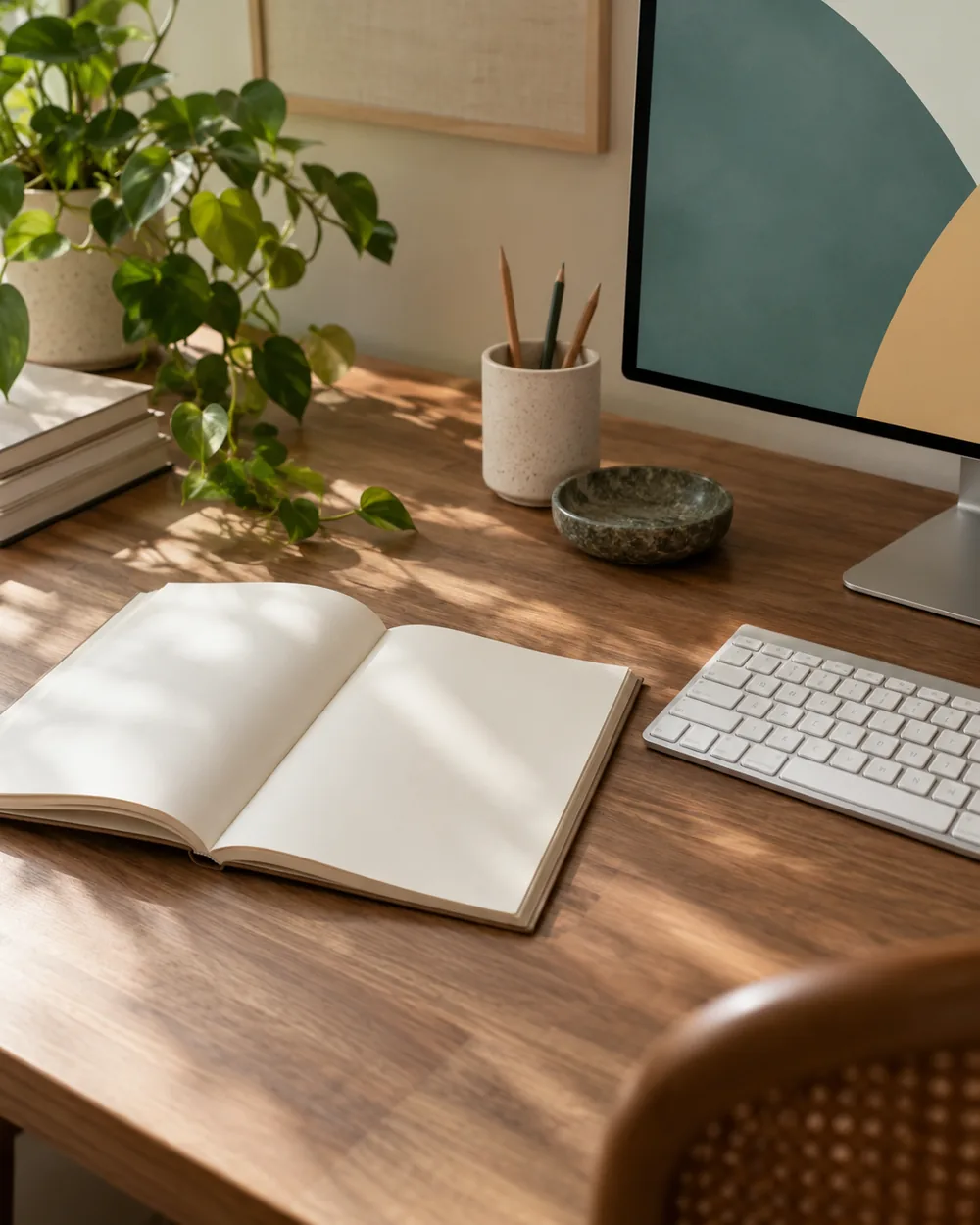
Set out the actual open book or printed reference beside the keyboard. Include any notebook used to record observations, rather than planning from a closed book alone.
Reserve the actual footprint
Choose a starting position for the reference and try a normal reading-and-note sequence. Notice which object is moved first and what useful space becomes unavailable.
Try the ordinary sequence
Compare one other suitable position while keeping the keyboard arrangement consistent. A visually symmetrical desk is not essential if it makes the reference harder to open or return.
Keep the useful boundary
Record the layout that fits this particular task. Equipment support and personal requirements still need their own consideration; this is a surface-use comparison rather than a prescribed viewing arrangement.
A couple of useful questions
Do I need to buy the objects in the picture?
No. The AI image is an editorial concept, not a product listing. Begin with your own suitable objects and actual dimensions.
Is this a tested equipment or health recommendation?
No. These are visual planning notes, not product tests or prescribed ergonomic settings. Use the actual maker instructions and your own requirements for equipment decisions.